

A Devastating Romance with a Pinch of Revenge
Carrigan Hamilton, Senior Staff Writer
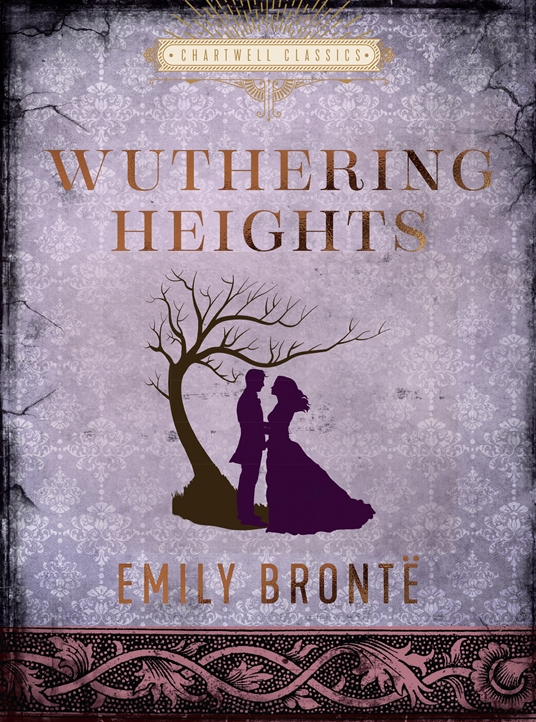
From book to screen, Wuthering Heights by Emily Brontë is a classical novel where the author brings life to every word on the page. The author tells a Gothic tale of love, heartbreak, and revenge. The story is set in both Thrushcross Grange and Wuthering Heights in the so-called “moors,” where the atmosphere is much darker and gloomier, setting up the tense mood of the entire novel.
The story is told through multiple narratives: the new tenant of Thrushcross Grange and a housemaid of the Earnshaws named Ellen (Nelly) Dean. Nelly recounts her personal experience of being involved in a tragic story of forbidden love between Catherine Earnshaw and Heathcliff, an orphan who was raised by Catherine’s parents. Cathy ends up marrying Edgar Linton, which further drives Heathcliff’s revenge against anyone who prevented him from being with Cathy.
Catherine Earnshaw, since she had met Heathcliff, was deeply attached to him while everyone else seemed to resent him. For all of Heathcliff’s life, the only person who had shown him any care and affection had been Cathy and people were trying to separate them from one another. Heathcliff can be easily described as an anti-hero when reading this novel as he is driven by a passion for revenge. Rather than being civil about people wronging him, he feels this need to destroy the lives of those who had destroyed him.
Beyond being a story of tragedy, the book offers ideas of social class stereotypes. Heathcliff is being treated as an outsider since he is an orphan which highlights the social issues of society in the 1770s to 1800s. A topic the author portrays well is her detailed description of discrimination, bringing more attention to this problem by providing a deeper message to the story apart from the main message of obsessive revenge.
A very hypnotizing and addictive characteristic of Brontë’s writing is the poetic nature of each sentence. Instead of “telling” the story, she has the ability to “show” through her writing. Even with the simplest phrases, she figures out a way to make beauty out of it.
One quote featured in the story that defines Brontë’s writing style in Wuthering Heights is “Is it not sufficient for your infernal selfishness, that while you are at peace I shall writhe in the torments of hell” (Brontë 163). The language used in her writing comes to life, enhancing the reading experience and making it more complex. The idea is not to confuse the readers of the perhaps challenging writing, but to further immerse them in the sublimity of the descriptions.
Something different regarding this classical novel in particular is the uniqueness of its genre. The book is characterized as a Gothic novel, which is a type of genre where the described atmosphere gives off a haunting ambience already described as the moors. The writer, ideally, sets up the emotions of the characters to fit the atmospheric setting. As Wuthering Heights is described to be a dark, gloomy place, it further adds to the novel’s theme of obsession and revenge.
Junior Isabelle Reeder provides her opinion on the story: “I thought it was really well-written. It is a perfect classical piece of literature.” The writing hypnotizes readers in a gothic fantasy world of love and revenge.
Though this book is a powerful piece of literature, there seems to be a lack of good and likeable characters. It is hard to root for anyone involved in the book as each character has their own personal flaws and faults, which seems to stem from the toxicity and cruelty that each character possesses.
With many adaptations of this novel from the earliest well-known 1939 film directed by William Wyler to the newest adaptation released just recently this year of 2026 on Valentine’s Day, starring Margot Robbie as Catherine Earnshaw and Jacob Elordi as Heathcliff, each movie gives a different perspective of the novel. The most recent adaptation focuses mainly on the first half of the novel, highlighting Cathy’s perspective and emotions of being kept away from being with Heathcliff while taking on a more sensual storyline. The 1939 film–displayed in black and white–also only covers the first generation, but it keeps the movie aligned almost exactly how the novel was written–with a romanticized gothic tone.
The story is a product of jealousy of wanting what others have that a character can’t get. For example, Heathcliff’s desire of being with Cathy but being stopped by Edgar Linton, who is a man of a higher class, thus being seen as more suitable for Cathy. Cathy does not have the choice to choose between her head or her heart and is forced to make the decision that is considered best for her own future.
Overall, this book is a wonderful gothic novel despite some unlikeable characters. Brontë’s storytelling has the ability to captivate readers into a novel of heartbreak, tragedy, and social divisions. This book is destined to be read by those who enjoy a dark romance with a dramatic atmosphere causing tensions throughout the reading experience.